
If this is your first trip to Alanya, these travel tips cover the questions people actually ask before they arrive: how to get here, how far the airport really is, how to pay for things, and whether the town is safe to explore. Alanya is one of the easiest coastal towns in Turkey for newcomers.
The focus here is on what matters day to day: keeping small cash for the dolmuş, and turning down the 'pay in your own currency' offer at the card machine. A quick read before you fly covers the basics.
How do you get to Alanya?
You reach Alanya through one of two airports, and which one you fly into changes your transfer time a lot. Gazipaşa-Alanya Airport (GZP) is the closer option at roughly 45 km from the town center, with a transfer of about 45 to 60 minutes. Antalya Airport (AYT) is the bigger hub, but it sits 125 to 135 km away, so plan on a 1.5 to 2 hour drive.
Either way, the journey follows the D400 coastal highway that runs along the Mediterranean shore. It is a scenic road, and most package transfers, shuttles, and private cars use it. If you are booking flights yourself and have a choice, Gazipaşa saves you a noticeable chunk of travel time at the end of a long trip.
Arrange your airport transfer in advance when you can. After a flight, it is much easier to step into a pre-booked car than to negotiate on the spot, especially if you land in the evening.
| Topic | Details |
|---|---|
| Currency | Turkish Lira (TL) |
| Airport | Gazipaşa 45 km / Antalya 125-135 km |
| Getting around | dolmuş + walking + cable car |
| Emergencies | 112 |
| Visa | e-Visa at evisa.gov.tr |
| Best time to visit | May-June and September-October (calm); July-August busiest |
| Water | bottled water |
| Payment | TL cash + card |
How do you get around Alanya?
Most of central Alanya is walkable. The town center, the harbour, Cleopatra Beach, and the lower slopes below the castle all connect on foot, so you can cover a surprising amount without any transport at all. Comfortable shoes matter more here than a bus map.
For longer hops, the dolmuş is the backbone of local transport. These are shared minibuses that run set routes; you pay the driver directly, in cash, and small Turkish Lira notes make this painless. Taxis are widely available too, but agree on the fare or confirm the meter is running before you get in.
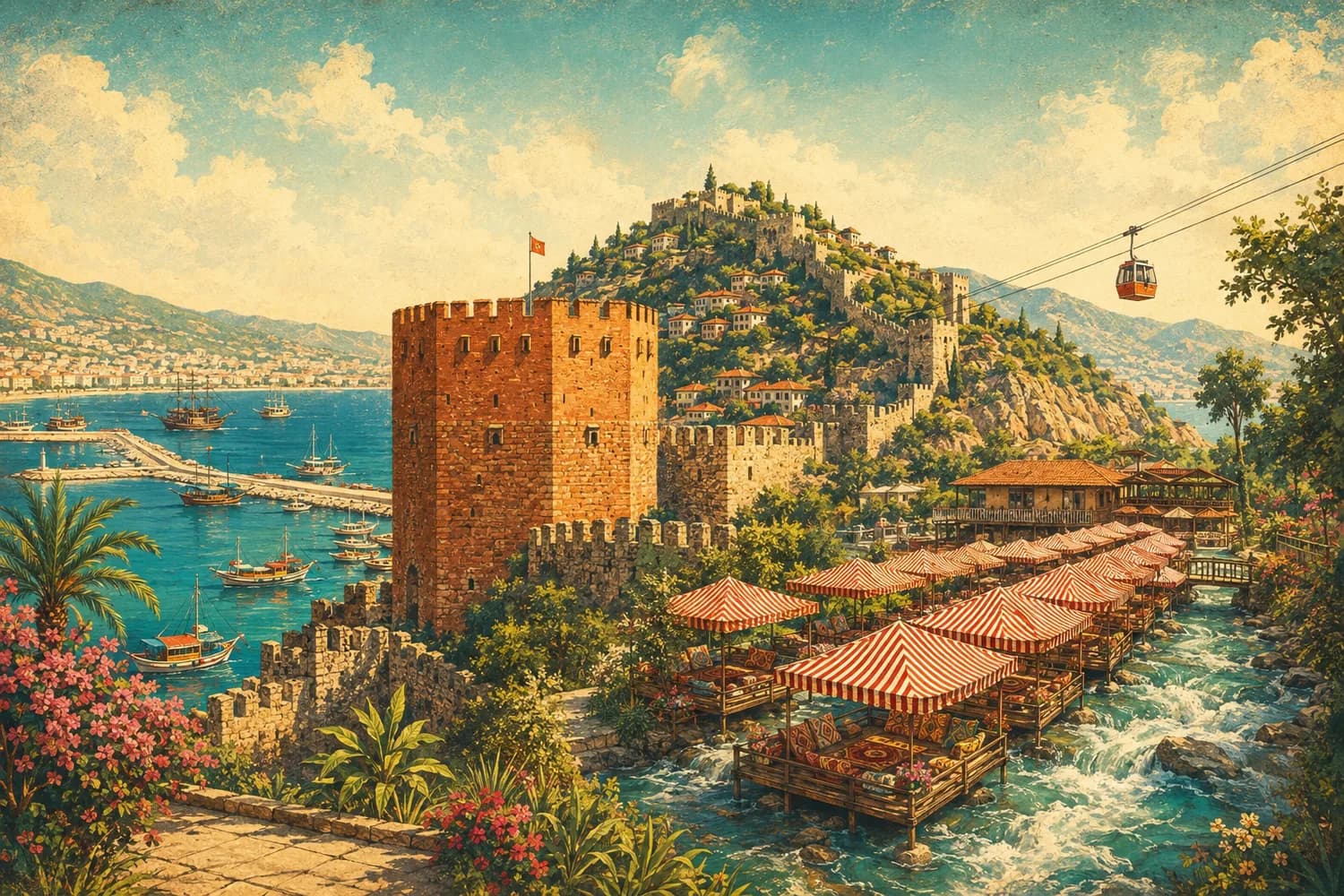
To reach Alanya Castle, the cable car is a fun option. It runs from a lower station near Damlataş (close to Cleopatra Beach) up to the Ehmedek section of the castle, a span of around 900 meters, operating from 09:30 to 23:00 with 17 cabins. If you prefer not to ride it, you can also reach the castle on the number 4 bus, by taxi, or on foot for those who want the climb.
What currency is used, and is it cash or card?
The official currency is the Turkish Lira (TL / TRY), and that is what you should plan to spend. Cards from Visa and Mastercard are widely accepted across hotels, restaurants, and shops, so you will not need a huge wad of cash for everyday purchases.
Cash still matters in the right places. Small eateries, the dolmuş, street food stalls, and tips are all easier with Lira in hand, so keep some small notes on you. A mix of card for bigger bills and cash for the little stuff covers nearly every situation.
One habit worth forming: when an ATM or a card machine offers to charge you 'in your own currency' (this is called dynamic currency conversion, or DCC), decline it and choose Turkish Lira instead. Paying in TRY usually gives you a better exchange rate than letting the terminal convert for you.
Where and how do you exchange money?
Exchanging your money inside Turkey is generally the better move, since rates abroad tend to be poor. You will find plenty of exchange offices marked simply 'Döviz' around the tourist areas, and PTT (the post office) is another reliable option for changing cash.
Always check the current rate before you hand over any money. Rates shift, and they vary from one office to the next, so a quick comparison saves you from a bad deal. Exchange rates change constantly, so treat the live board at the counter as your reference rather than any figure you read in advance.
While many tourist spots will accept Euros, paying in Euros is usually a disadvantage because of rounding and unfavorable change. Spending in Lira keeps things simple and predictable, so convert what you need and use TRY for day-to-day costs.
Is Alanya safe?
Yes, Alanya is a tourist-friendly coastal town that is easy and relaxed to explore. It has long been set up for visitors, and getting around as a newcomer is straightforward. For any emergency, there is a single number to remember: 112, which offers service in Turkish plus four foreign languages.
You may see broad travel advisories online and wonder how they apply here. The US State Department issues a general Level 2 ('Exercise Increased Caution') advisory for Turkey, and major tourist coastal centers like Antalya and Alanya remain calm with tourism running as normal. The strict Level 4 warning applies only to the zone within 10 km of the Syria and Iraq border, which does not include Alanya.
In practical terms, use the same common sense you would anywhere: keep an eye on your belongings in crowded spots and agree on prices before services. Beyond that, the coast here is quiet and welcoming.
What should first-timers know before arriving?
Sort your visa first if your nationality needs one. Eligible travelers can get a Turkey e-Visa from the official site at evisa.gov.tr in around three minutes, and your passport should be valid for at least 60 days beyond the end of your stay. Apply through the official site only, not a third-party reseller.
On the ground, a few small things make life easier. Tap water is chlorinated and monitored, but it is hard (high in lime), so bottled water is the gentler choice for sensitive stomachs. Thanks to tourism, you will hear German, Russian, and English alongside Turkish, so communication is rarely a barrier. If you need a pharmacy after hours, the duty pharmacy can be looked up through the e-Devlet portal at turkiye.gov.tr.
Timing your trip matters too. July and August are the busiest and hottest months, with daytime highs around 34°C, while spring (April to June) and autumn (September to October) are calmer. Summer averages around 29.6°C with roughly 11 hours of sun a day and almost no rain; the sea sits at 28 to 29°C in summer, and the swimming season runs from May to November.
Should you take a guided tour or explore on your own?
For the town itself, exploring on your own works beautifully. The center, harbour, beach, and castle approaches are all within walking distance, so you do not need a guide to enjoy the heart of Alanya. Wander, stop for coffee, and take it at your own pace.
For excursions further afield, a guided tour run by a licensed agency saves time and hassle. Travel Alanya has operated in Alanya since 1990 and works under TÜRSAB license No. 11267. A detail worth knowing: there is no upfront payment on the tours; you pay your guide on the day of the tour itself.
If you want to book, reservations go through WhatsApp at wa.me/905345940481. Combining a few self-guided days in town with one or two organized day trips tends to give first-timers the best of both.
Where should you eat in Alanya?
For seafood, head toward the harbour and the seafront, where the fish restaurants cluster with views over the water. It is the obvious and rewarding place to start when you want a proper Mediterranean meal by the coast.
Rather than list specific venue names here, we cover where to eat in detail in our dedicated Travel Alanya Restaurant Guide. It is the better place to compare options and find something that suits your taste and budget.