
Departure daysWednesday, Friday, SundayBook now
Alanya Castle
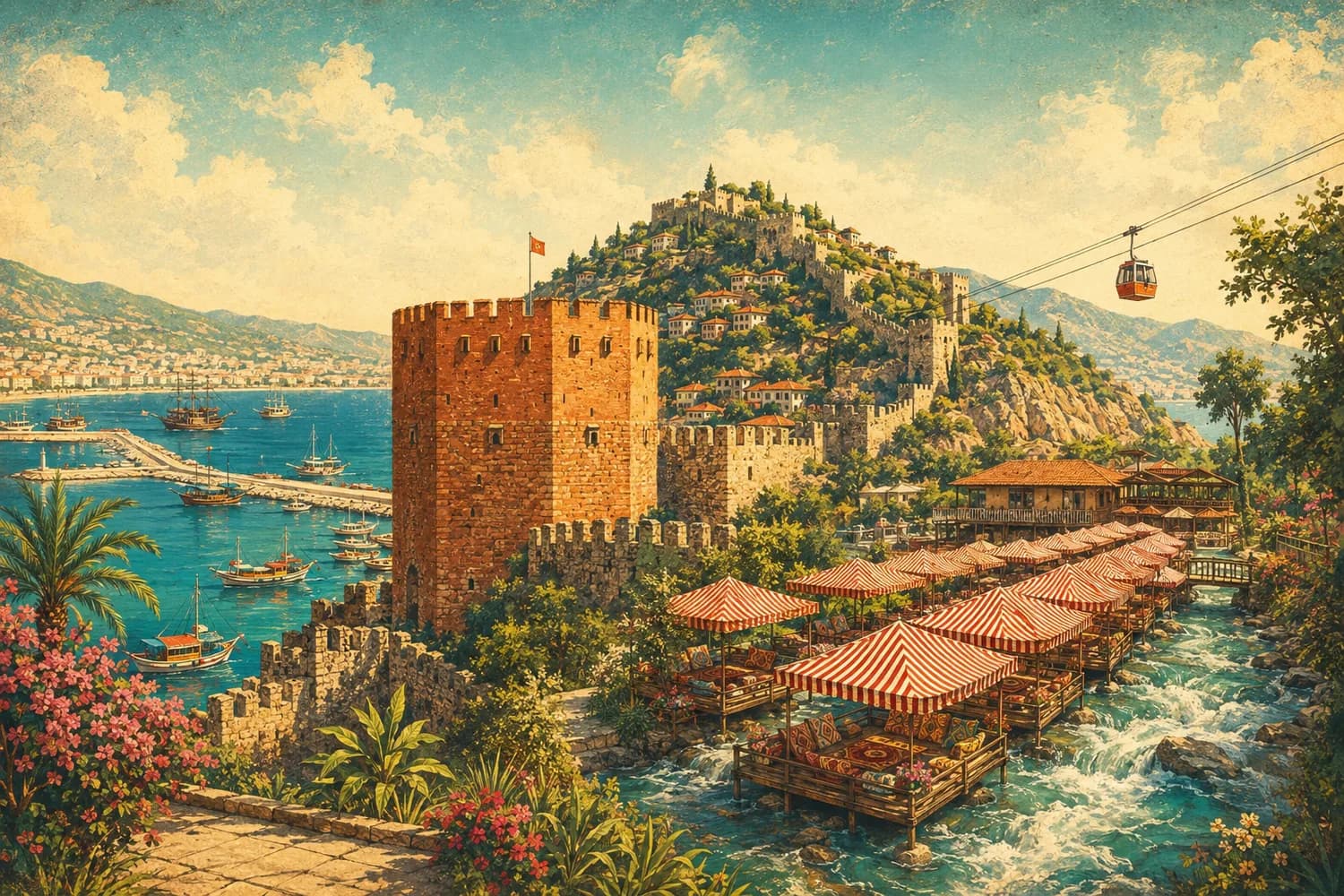
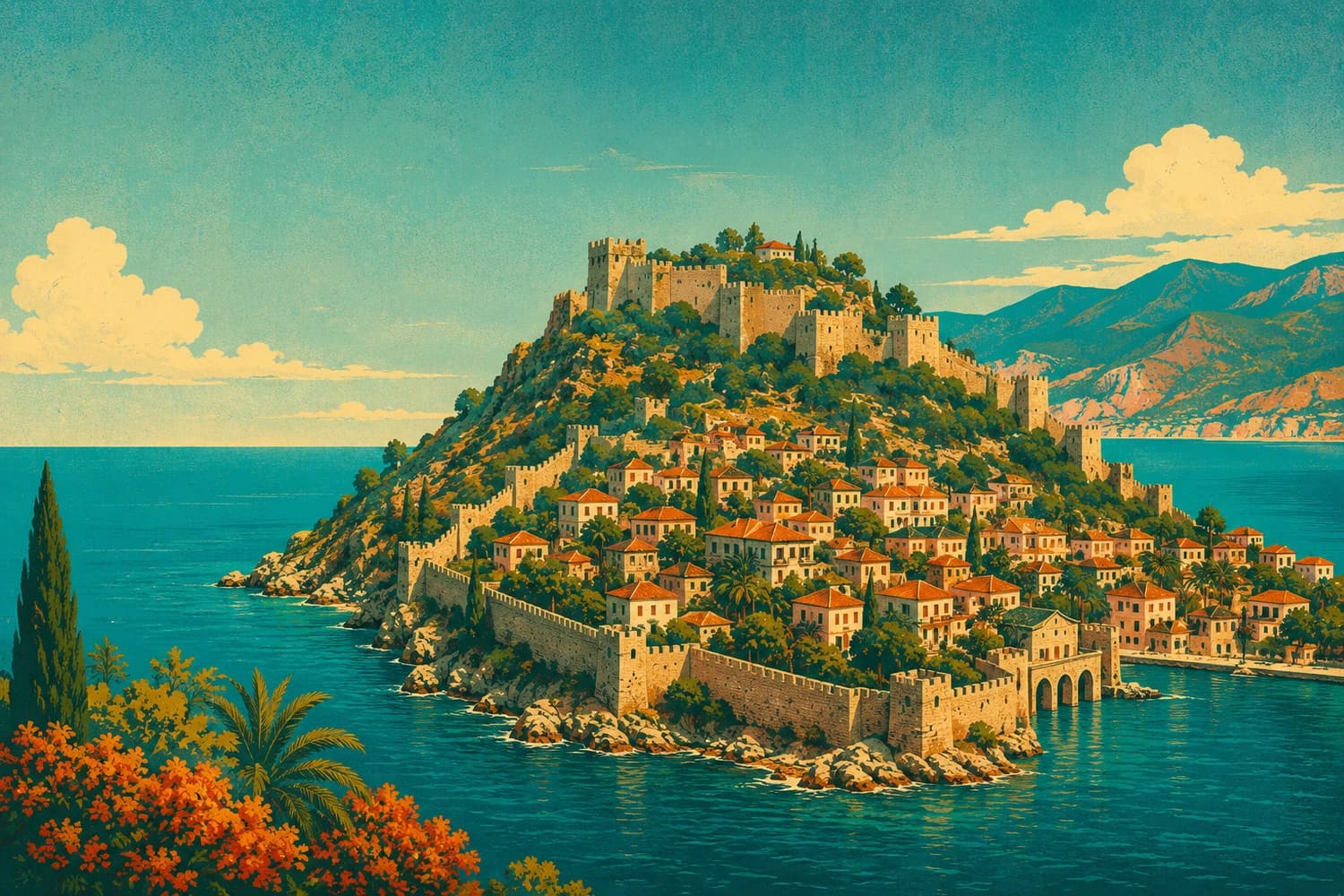
The road up the peninsula leaves you in a ten-hectare open-air museum. The walls run for six and a half kilometres with close to a hundred and forty bastions along them. Inside stand nearly four hundred cisterns, the cut-stone Bedesten and the Süleymaniye Mosque. The inner castle sits two hundred and fifty metres above the sea, Cleopatra Beach on one side and the eastern shore on the other.
The peninsula's past runs far deeper than the Seljuks. In the Hellenistic age a harbour town called Korakesion stood here, and Byzantium knew it as Kalonoros. In 1221 Sultan Alâeddin Keykubad took the peninsula and had the walls rebuilt. Ehmedek, the Akşebe Masjid, the Andızlı Mosque and the Seljuk bath all date from those years, and you still enter the castle through six gates.
On 25 February 2000 the Turkish Ministry of Culture put Alanya on UNESCO's World Heritage Tentative List. What the list names is not a single monument but the peninsula itself, lived in layer upon layer from the Hellenistic age to the Ottomans.
The inner castle crowns the highest point. In its north-east corner, built against the walls, is a spot known as Adam Atacağı, roughly "where men were thrown"; the story goes that in Roman times people sentenced to death were pushed off the cliff here. Look down from the same edge today and the town, the harbour and the whole bay open up beneath you.
Not all of the castle needs a ticket. Around the top of the cable car, Ehmedek, the Süleymaniye Mosque, the Akşebe Masjid and the Mecdüddin Cistern are free to walk around. The ticketed part is the inner castle at the very top, and the Müzekart museum pass is valid there. Our tour hands you a cable car ticket and leaves you two to three hours of free time at the castle, so how far up you go is your call.
- 6.5 km of walls
- ~140 bastions
- Inner castle 250 m
Alanya Castle